15,178
products in the catalogue, 13,959 active and 53 hidden, from MECCA, Sephora AU and Rhode.
 proposal · 16 Oct 2026
credits expire in 6 days
a proposal for the atlas team · six days of credit, twelve months of roadmap
We hold US$70,000 of Gemini credit that expires on 22 October. This page proposes how to turn it into the Beauty Genome — a structured, cited record for each of the 15,178 products in the catalogue — and the twelve months of Atlas that get built on top of it.
15,178 products 2,073 ratings 653 with a Reddit score from the record, atlas-admin, 16 Oct 2026
today
Each dot is one product in the catalogue. The 653 pink ones carry any independent evidence: a Reddit sentiment score.
after six days
Every product has a record, coloured here by its measured shade and grouped by what it is. Positions are illustrative until the embeddings exist.
01 · where we are
The crawler does its job: three retailers, refreshed daily, last synced 15 Oct at 13:00 UTC with no failures. What a visitor finds when they open a product is the thinner part.
15,178
products in the catalogue, 13,959 active and 53 hidden, from MECCA, Sephora AU and Rhode.
2,073
ratings, which is 0.14 for every product in the catalogue.
79
members, none of whom joined in the last seven days.
653
products with a Reddit score, from 5,101 mentions computed 21–25 July.
4.7%
of active products carry any independent evidence — 653 of 13,959. Every other page shows a photo, a price and whatever the community has added.
US$70k
of Gemini credit, expiring 22 October. Whatever it has not been turned into by then is gone. Atlas already calls Gemini (gemini-3.6-flash) for refinement and Reddit sentiment, behind a spend cap and a prompt fence.
from the record atlas-admin dashboard, catalogue and Reddit-coverage reads, 16 Oct 2026. The credit figure and expiry are as briefed; confirm the exact expiry time in Cloud Billing.
Two numbers set the strategy. At 0.14 ratings per product, community reviews will not fill product pages for years at the current rate. At 4.7%, independent evidence exists for one product in twenty.
The genome does not wait for either. It reads what is already written about each product — retailer descriptions, ingredient lists, swatch photos, Reddit threads, YouTube reviews — and stores it as a record the app can show on the first visit. Reviews from members then sharpen a page that is already useful, instead of being the only thing on it.
02 · the idea
Five layers, each read from evidence that already exists, each carrying its sources and a confidence. Written in bulk while the credit lasts, then served from Mongo with no model in the request path. A field with too little evidence stays empty rather than guessed, the rule the crawler's refine step already follows.
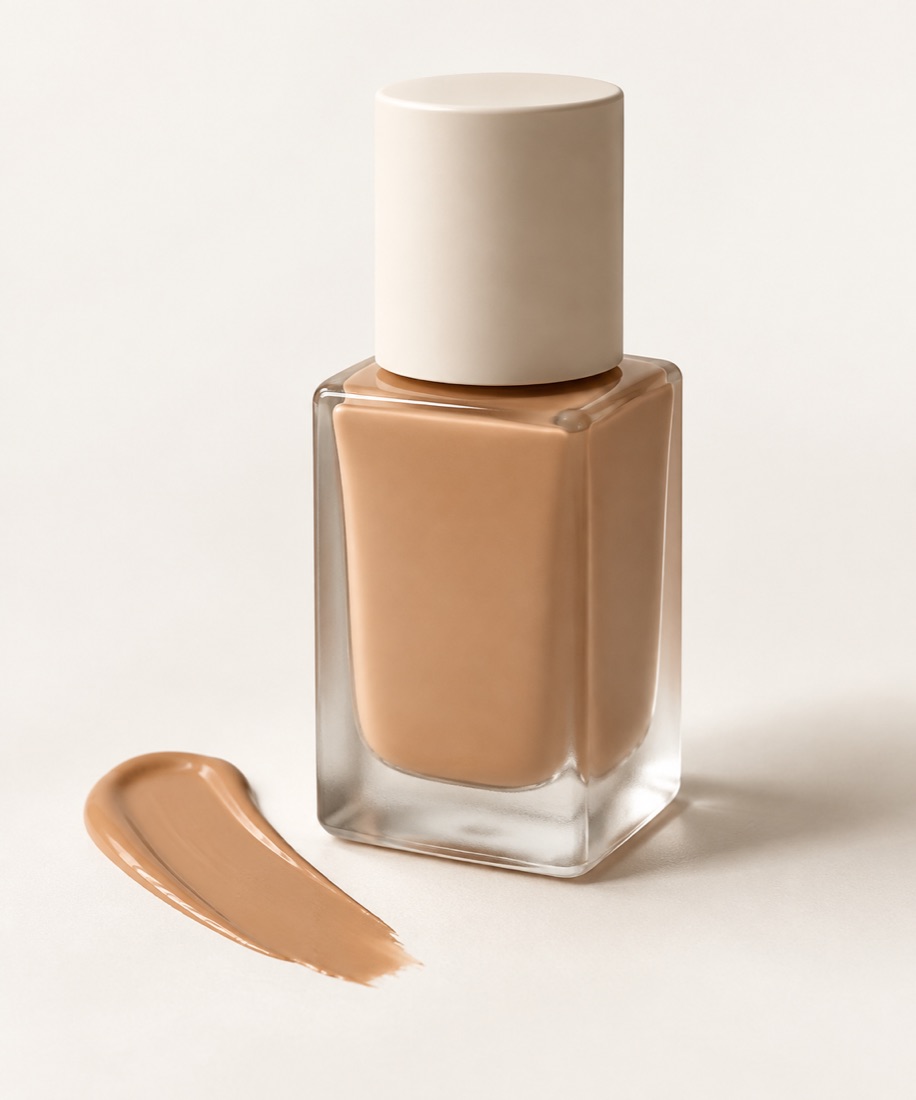
sample brand · foundation
sample record · illustrative values
finishnatural, slightly dewy
coveragelight to medium
wear8–10 h · 23 reports
texturefluid serum
fragrancenone listed
suitsdry, normal
oxidisesslightly · 6 reports
transfernot enough evidence
praised
complaints
A plant-derived oil that softens skin without a heavy feel.
Vitamin B3; helps with redness and uneven tone.
A preservative; considered fine at the 1% or lower levels used in cosmetics.
Your saved shade sits ΔE 1.8 from 4W, which most people would not tell apart.
retailer data, INCI, swatches, Reddit, YouTube Gemini batch, under the credit genome record in Mongo app, share pages, brand insights
03 · six days · where the credit goes
The catalogue on its own is cheap: four Pro-quality passes over all 15,178 products cost about US$4,000 at batch prices. So the credit goes where it buys things we keep after 22 October — corpora, labelled data, models we own, a media library — and nothing is left running that bills on day seven.
should · about US$52k
The genome core, a teacher dataset with Gemma models we can download, a shelf-scan recogniser, the full Reddit history, rights-cleared video reviews, shade measurement, embeddings, eval sets and the ingredient encyclopedia.
could · the last ~US$11k
Catalogue expansion if the crawlers land by day 3 (Elysée offered the list of next sites on 14 October), video reviews to 8,000 hours if creator licences land, or the creative library kept at full. A US$7k buffer is held for re-runs either way.
should not
AI-written reviews, a runtime chatbot, tuned Gemini endpoints (1.5× the base price, billed after expiry), storage left on Google Cloud, or bulk-downloading YouTube.
Everything we make is exported as files: JSONL, Parquet, embeddings, model checkpoints, media. Tuned endpoints, Cloud Storage and BigQuery all start billing the card on day seven.
Batch prices are half the standard rate. Gemini API billing tiers cap a new account at US$250 to US$2,000 a month, so the spend runs through Vertex AI, where it is limited by shared capacity rather than a monthly cap.
Every job finishes and exports by 21 October, a day before expiry. Veo files on the Gemini API are kept for two days, so media is downloaded as it lands.
the workloads · switch them, change a model, watch the total
the six days
spending creditexporting what we keepsetup, no spend
what we will not spend it on
What one line of the creative library looks like: six seconds generated from a still with Veo 3.1 Lite for this page. Product-free loops like this are worth having; a library of synthetic faces is not.
Misleading conduct under the Australian Consumer Law, and it would poison the one thing Atlas sells: ratings people can trust. The ACCC requires reviews to be genuine and any incentive to be disclosed and outcome-neutral.
Costs money on every message after day six, competes with free general assistants, and drifts into skin-health advice. The research runs found chat advisors losing trust over invented ingredient and routine advice, while grounded utilities kept their users.
The tuned model stays on Google's endpoint at 1.5× the base inference price. A Gemma checkpoint we download is the durable version of the same idea.
Facial images are sensitive biometric information under the Privacy Act, and the OAIC's Bunnings determination shows what weak consent costs. Measured shade colour gets most of the value with no face involved.
YouTube's terms bar bulk downloading and automated access without permission. Video reviews come from creators who consent or footage we license.
04 · what it unlocks
Each one reads fields the credit pays for this week, so after 22 October it costs a database query rather than a model call. Every screen below is drawn in the app's own grammar; the products and numbers on them are samples.
Atlas, MECCA, Sephora AU and Reddit side by side, each with its sample size, plus the price per millilitre at each retailer. A retailer cannot publish a panel showing its own ratings running high. Atlas can, and the price row is where an affiliate link earns its keep.
The overall rating, re-weighted to members who share your skin type, tone and concerns from the beauty profile. Below ten matching raters it says so and shows the overall score, rather than a number built on three people. Until enough members rate, the genome's "suits" field stands in, and is labelled as such.
Pick a shade you already wear and Atlas finds the nearest one in any foundation by measured colour, not by shade name, and says how close it is. Every shade in the catalogue gets measured once, from its swatch photo.
Dupes ranked by finish, ingredient overlap and what people say, never by a similar name. Each pair shows why it qualifies and what you give up. "Dupe" is the most searched word in the category; Atlas answers it with evidence instead of a TikTok.
Photograph your bathroom shelf. Atlas matches each product against catalogue images, you confirm, then rate them one swipe at a time. When you finish something, log the empty — that is the moment an opinion is complete. This is the answer to 0.14 ratings per product.
UV index and humidity for your postcode each morning, matched to what is on your shelf: when to reapply, which moisturiser suits today. Review apps are opened when someone is about to buy; this gives Atlas a reason on the other 29 days of the month.
05 · the next twelve months
Five lanes from October 2026 to September 2027. Pink items are paid for by this week's credit; everything after them reads what the credit produced. Open items from the current backlog finish in the first lane, because a genome on top of a Join button that forgets you is still a broken app.
select an item on the timeline
One record per product, written in six days under the credit: attributes, what people say, ingredients explained, measured shade colour, and neighbour lists.
06 · the field
Three independent research runs agreed on the pattern. The apps people keep answer "should I buy this, and will it suit me" at the moment of decision. Review communities without that utility either became a national habit, as Hwahae and @cosme did, or closed: Supergreat raised about US$30 million and shut in December 2023.
| who | what they do well | what they can't do for an Australian shopper |
|---|---|---|
| Hwahae · Korea | Barcode ingredient analysis, reviews filtered by skin type and age, twice-yearly awards; reported 5M+ installs. | Korean catalogue, retailers and ingredient rules. |
| @cosme · Japan | Over 22 million reviews filterable by skin and age, daily rankings, shopping and physical stores. | Japan only. |
| Yuka · Think Dirty · INCIDecoder | Instant ingredient scores in the aisle. Yuka takes no brand money and is funded by subscriptions. | Ingredients only: no reviews, shades, dupes or Australian prices. |
| Skin Bliss | Skin-fit checks, routine conflict warnings, whole-shelf analysis. | No community, no local retailer prices. |
| MECCA · Sephora AU | Reviews tied to purchases, loyalty tiers, exclusives. | Can't show anyone else's ratings, a competitor's price, or a cheaper dupe. |
| Perfect Corp · ModiFace · Haut.AI | Virtual try-on and selfie skin analysis, sold to brands. | Business-to-business, and selfie analysis carries Privacy Act biometric obligations. |
| TikTok Shop · ShopMy · LTK | Creator commerce, with beauty commissions reported at 10–30%. | Entertainment and selling, not evidence. |
| Atlas, after this week | Members' ratings, three Australian retailers, the Reddit voice, ingredient scores, and a cited record for every product. | Not yet the community. That is the year's work. |
Australian UV and humidity, Australian retailer prices, and the r/AustralianMakeup voice. The research found no app that joins these three, and Atlas already holds two of them.
Profile, shelf, measured shade colour and people-like-me scores. The research recommended exactly this privacy-light route for year one, and deferring face analysis until there is scale and legal review.
Affiliate links first (Adore Beauty reported around 10%, Sephora AU 2.4–8% through networks, MECCA's rate not public), brand insights once there is density, and a subscription only if power users ask for one.
From the Dossier competitive panel (Gemini, Perplexity and xAI members), 16 October 2026. Install counts, review counts and commission rates are as those runs reported them and were not independently checked.
07 · decide today
Tick what the team agrees to. The summary updates as you go; copy it into the engineering channel and the batch jobs can be queued on 17 October.
the decision, ready to paste
The button copies the summary above to your clipboard. Nothing is sent anywhere.